
The Modern Guide to Hearing Wellness: Preserving the Art of Sound
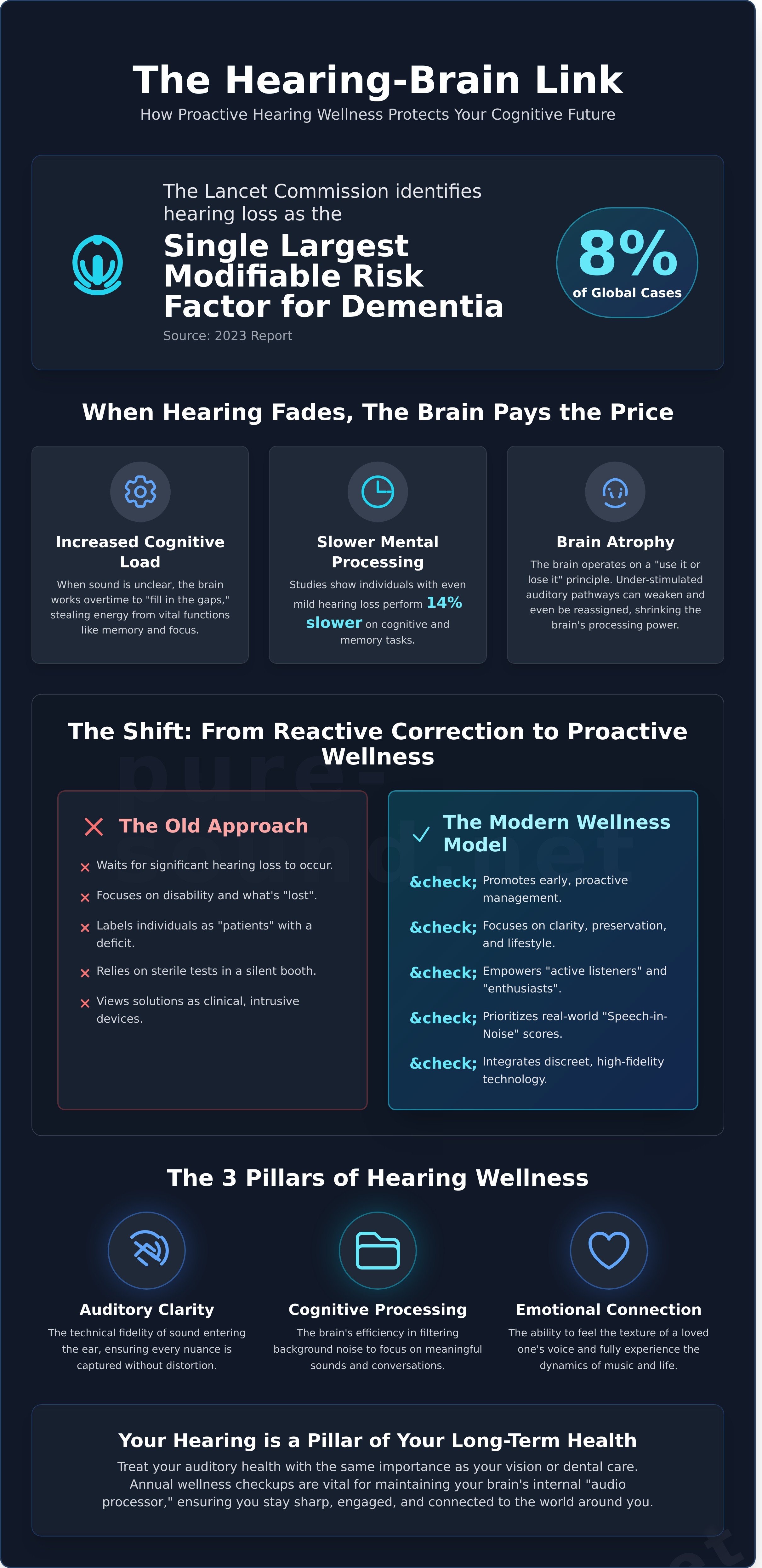
A 2023 report from The Lancet Commission identifies hearing loss as the single largest modifiable risk factor for dementia, contributing to 8% of cases globally. It's a startling figure that reframes how we perceive the act of listening. For those who appreciate the delicate timbre of a cello or the subtle inflections in a loved one's voice, the stakes of hearing wellness extend far beyond simple volume. You understand that sound isn't just data; it's the texture of your life. It's natural to feel a sense of unease when that clarity begins to soften, or to worry that traditional medical solutions might feel clinical and intrusive rather than an extension of your personal style.
You deserve to move through the world with the same confidence you feel when sitting in the sweet spot of a perfectly tuned listening room. This guide shows you how a proactive approach to hearing wellness protects your cognitive health, strengthens your emotional bonds, and restores the crystalline detail of your favorite music. We'll examine the latest advancements in discreet, high-fidelity technology and provide a clear path to maintaining your mental sharp edge while staying fully engaged in every social setting.
Key Takeaways
- Understand why shifting from reactive correction to proactive hearing wellness is essential for maintaining a high-fidelity lifestyle and long-term auditory health.
- Explore the profound "Hearing-Brain Link" to discover how clear sound reception prevents mental fatigue and preserves your brain’s cognitive processing power.
- Overcome modern stigmas by learning how sophisticated, discreet technology allows active generations to prioritize their hearing without compromising on aesthetics.
- Identify the five essential steps to auditing your auditory environment and establishing a professional baseline for lifelong sound clarity.
- Discover how the Pure Sound philosophy integrates fifteen years of technical expertise with a deep respect for the artistic and emotional experience of listening.
What is Hearing Wellness? Beyond the Absence of Loss
Hearing wellness represents a fundamental shift in how we perceive our relationship with sound. It's a state of complete auditory and neurological harmony, moving far beyond the simple absence of a clinical deficit. True wellness is the presence of clarity, the preservation of detail, and the effortless processing of the world's many layers. To appreciate this evolution, we must rethink the basic question: What is hearing loss? While traditional definitions focus on the inability to detect specific frequencies, hearing wellness prioritizes the brain's ability to decode the symphony of life with precision and ease.
By 2026, proactive management has officially superseded reactive correction as the gold standard of care. Data from the Lancet Commission indicates that addressing auditory health early can reduce the risk of cognitive decline by up to 42 percent. We no longer wait for silence to settle in before taking action. Instead, we treat the auditory system like a high-end instrument that requires consistent tuning to maintain its resonance and range. This holistic state rests on three essential pillars:
- Auditory Clarity: The technical fidelity of the signal entering the ear, ensuring every nuance is captured without distortion.
- Cognitive Processing: The brain's efficiency in filtering out background clutter to focus on what truly matters.
- Emotional Connection: The ability to feel the texture of a loved one's voice or the subtle dynamics of a live performance in Lancaster.
Maintaining these pillars directly influences longevity. When the brain doesn't have to struggle to interpret sound, it frees up significant cognitive resources for memory and social engagement. It's a commitment to a life lived in high definition.
The Shift from Medical to Lifestyle
The "patient" label is becoming a relic of the past. Today, we recognize the "active listener" or the "music enthusiast" who seeks to optimize their sensory experience. This transition emphasizes environmental awareness. In our modern soundscapes, where portable audio and urban noise levels often exceed 85 decibels, wellness is a conscious choice. It involves curated listening habits that protect the delicate architecture of the inner ear while still embracing the joy of a rich, acoustic life.
Hearing Wellness vs. Hearing Tests
A baseline audiogram is a snapshot, not the entire story. While a standard test measures what you can hear in a sterile, silent booth, a wellness approach focuses on speech-in-noise scores. This metric is the true pulse of your auditory health. It determines how well you function in a crowded restaurant or a busy family gathering. Annual checkups are now as vital as your 12-month dental or vision exams; they ensure your internal "audio processor" remains sharp and responsive to the world around you.
The Neurological Connection: How Sound Fuels Your Brain
We often mistake hearing for a purely mechanical process involving only the ears. It's actually a sophisticated neurological event where the ears act as high-fidelity microphones, but the brain performs the heavy lifting of interpretation. When sound signals arrive at the auditory cortex blurred or incomplete, the brain must work overtime to fill in the gaps. This constant "cognitive load" is physically exhausting. A 2023 study published in medical journals revealed that individuals with even mild hearing loss performed 14% slower on memory and cognitive tasks compared to those with clear hearing. The brain literally steals energy from other executive functions just to decode a simple conversation.
Projections for 2026 suggest that proactive hearing wellness management will become the primary strategy for maintaining long-term mental acuity. Research from the Lancet Commission indicates that addressing midlife hearing loss could prevent nearly 8% of dementia cases globally. This is because the brain operates on a "use it or lose it" principle. When sound stimulation decreases, the auditory cortex doesn't just sit idle; it begins to atrophy. In some cases, the brain actually reassigns those unused areas to visual processing, which sounds efficient but actually weakens the overall neural network responsible for complex communication.
The auditory cortex requires a consistent stream of rich, detailed data to stay healthy. This isn't just about volume; it's about the fidelity of the signal. High-resolution sound keeps the neural pathways vibrant and flexible. By prioritizing hearing wellness, you aren't just protecting your ears; you're providing the essential fuel your brain needs to remain sharp, focused, and resilient as you age. Protecting these pathways starts with preventing noise-induced hearing loss through mindful exposure and professional care.
Combatting Brain Fog and Social Fatigue
Social exhaustion often stems from "listening effort," the measurable physiological strain of trying to understand speech in noisy environments. When you leave a dinner party feeling drained, it's often because your brain has been running a mental marathon. Scientific imaging has shown that long-term auditory deprivation can lead to a 5% decrease in gray matter volume in the primary auditory cortex over a six-year period. Restoring these sound signals doesn't just make things louder; it re-awakens dormant neural pathways, clearing the "brain fog" that many mistake for simple aging. This restoration allows the brain to return to its natural, relaxed state of processing.
Emotional Wellness and Sound
Hearing health is inextricably linked to our emotional core. The subtle nuance in a loved one’s voice or the rich timbre of a favorite piece of music triggers the release of oxytocin and dopamine. When these textures vanish, the risk of social isolation and anxiety climbs. Data shows a 40% higher risk of depression in adults with untreated hearing issues compared to those with normal hearing. True listening is a form of mindfulness; it requires a presence that's only possible when the acoustic signal is pure and effortless. If you've noticed that the textures of your favorite music or conversations are becoming thin, it's a wise choice to explore professional acoustic calibration for your life to restore that vital emotional connection.
Modern Barriers to Wellness: Addressing the Stigma
The perception of hearing loss is undergoing a radical shift in 2024. For too long, the "old age" myth relegated hearing health to the final chapters of life; however, Gen X and Boomers are now reclaiming hearing wellness as a proactive pillar of their mid-life vitality. Data from the National Institute on Deafness and Other Communication Disorders (NIDCD) indicates that 13 percent of Americans aged 12 or older experience bilateral hearing loss. This isn't a condition reserved for the elderly. It's a health metric that affects active professionals, musicians, and vibrant community members across Lancaster County who refuse to let their sensory experiences fade.
Aesthetic anxiety remains a primary hurdle for many. The fear of visible medical devices often outweighs the desire for auditory clarity. This hesitation comes at a steep price. The Hearing Loss Association of America reports that individuals wait an average of seven years before seeking professional help. During this period, the brain's ability to process speech nuances begins to atrophy. This delay creates a significant link between hearing and brain health, where the lack of consistent auditory stimulation can accelerate cognitive decline. Silence isn't a neutral state; it's a metabolic tax on your neurological resources.
Many residents believe they "hear well enough" because they can still follow a conversation in a quiet room. This is a dangerous oversimplification of how the human ear functions. True hearing wellness isn't about volume; it's about the brain's capacity to filter background noise and localize sound in a complex environment. When you ignore the early signs of diminished clarity, you aren't just missing the occasional word. You're forcing your brain to work 30 percent harder just to decode basic syllables. This cognitive load leads to chronic exhaustion and eventual social isolation, which are far more visible than any modern hearing device.
The Evolution of Discreet Technology
The era of bulky, conspicuous devices has ended. Modern Invisible-in-Canal (IIC) and TruHear™ technologies offer a level of discretion that mirrors the elegance of high-end audio equipment. These devices sit deep within the ear canal, utilizing the natural shape of the pinna to direct sound with surgical precision. By blending the functionality of premium "hearables" with medical-grade acoustics, these solutions ensure that 95 percent of users report higher confidence in social settings. When the technology disappears, your focus returns to the art of the conversation.
Pure Sound vs. Big Box Retailers
Choosing a hearing solution in a warehouse setting is a transactional mistake that overlooks the complexity of human biology. A "hearing aid sale" focuses on the hardware, while a wellness consultation at Pure Sound focuses on the delicate process of neurological adaptation. Our Lancaster County experts understand that every ear is a unique acoustic fingerprint. Unlike big-box retailers that use "one-size-fits-most" algorithms, we prioritize personalized programming. This ensures your brain adapts to new sounds harmoniously, providing the long-term support necessary for a life of rich, detailed soundscapes.
Your Hearing Wellness Checklist: 5 Steps to Sound Health
Achieving true hearing wellness requires a structured approach, blending clinical precision with daily mindfulness. Think of your auditory health as a finely tuned instrument that requires regular calibration and protection to maintain its resonance. The purity of sound is a gift that deserves preservation, yet it's often the first thing we take for granted. By following a dedicated checklist, you can ensure that the rich textures of your favorite music and the subtle nuances of conversation remain crystal clear for years to come.
The first step involves establishing a baseline. Without a starting point, progress remains invisible. A professional evaluation provides a data-driven snapshot of your auditory landscape, identifying subtle shifts in frequency response that you might not notice in your daily routine. This isn't merely a test; it's the foundation of your long-term health strategy. Second, you must practice environmental hygiene. Hidden noise pollution, such as the 75-decibel hum of an old dishwasher or the 85-decibel roar of Lancaster city traffic, accumulates over time. Protecting your ears from these consistent stressors is vital for maintaining the delicate architecture of the inner ear.
Third, nourish your system with the right micronutrients. The auditory system is metabolically active and requires specific support to function at its peak. Zinc, Magnesium, and Folate are essential components of this biological orchestra. Clinical studies show that Zinc, at a daily intake of 11mg for men and 8mg for women, supports cell growth and helps prevent tinnitus. Magnesium acts as a protective barrier against noise-induced damage, while Folate has been shown to reduce the risk of age-related hearing loss by 20% in adults over 60. Fourth, engage in auditory training. Hearing happens in the brain, not just the ears. Training your listening skills through targeted exercises can improve speech-in-noise recognition by up to 25% over a 12-week period, effectively sharpening your brain's ability to isolate a single voice in a crowded room.
Finally, integrate technology as a tool for enhancement rather than a last resort. Modern solutions are discreet, high-fidelity bridges that restore the natural dynamics of your environment. They aren't signs of decline; they're sophisticated upgrades to your sensory experience that allow you to engage fully with the world around you.
Baseline Evaluations in Lititz and Beyond
A modern, comprehensive hearing wellness assessment in Lititz goes far beyond old-fashioned "beep" tests. You'll experience live speech-mapping, a technology that uses real-time visual displays to show exactly how your ears process the complex frequencies of human voices. This data allows you to set realistic wellness goals for the next 12 months, ensuring your auditory clarity remains consistent as you move through different acoustic environments. It's about precision, not guesswork.
Daily Habits for Auditory Preservation
Protecting your ears starts with the 60/60 rule: listen to headphones at no more than 60% volume for 60 minutes a day. It's also vital to monitor your decibel budget. Reducing background noise by just 10 decibels in your home environment can significantly lower cognitive fatigue. Be aware of the 200 plus ototoxic medications, including certain common NSAIDs and antibiotics, that can impact your hearing wellness by damaging the sensitive hair cells in the cochlea.
Ready to begin your journey toward acoustic perfection? To ensure your ears are performing at their peak, you should schedule your baseline auditory mapping with a specialist who understands the art of sound.
The Pure Sound Philosophy: Elevating the Art of Listening
At Pure Sound, we believe that sound is a masterpiece to be experienced rather than a utility to be managed. Our philosophy centers on the intersection of high-fidelity audio engineering and deeply compassionate patient care. We don't simply provide devices; we restore the delicate nuances of the human experience. Since 2009, Sean Mark has applied 15 years of hearing instrument expertise across Pennsylvania to ensure that every client receives a solution tailored to their unique acoustic environment. This approach moves beyond the clinical. It's a commitment to hearing wellness that respects the emotional weight of every conversation and every note of music.
Our selection process focuses heavily on "Invisible Behind the Ear" solutions. These designs cater specifically to the active lifestyles prevalent in Lancaster County. Whether you're hiking in local parks or attending a performance at a crowded venue, these instruments remain discreet. They offer a secure fit that doesn't interfere with eyewear or physical movement. We prioritize these elegant designs because we believe your technology should empower your lifestyle without becoming its focal point. By making premium technology both accessible and aesthetically refined, we remove the stigma often associated with auditory assistance.
The TruHear™ and ClearTone™ Advantage
Engineering for clarity requires a departure from standard amplification. Our TruHear™ and ClearTone™ systems prioritize natural soundscapes by utilizing advanced processors that sample the environment 500 times per second. This speed allows the device to distinguish between background noise and the voices you want to hear. We've eliminated the friction of daily maintenance by ensuring our premium models are 100% rechargeable. A single three-hour charge provides 24 hours of continuous use, removing the need for tiny, cumbersome batteries. You can experience this technical precision firsthand at our dedicated locations in Lititz, Elizabethtown, and Strasburg. Each office is equipped with diagnostic tools that mirror real-world listening conditions to ensure your settings are perfect before you leave.
Your Journey Starts with a Conversation
We understand that investing in your auditory health is a significant decision. To provide absolute peace of mind, we offer a comprehensive price-match guarantee on identical technology. If you find a lower written quote for the same instrument, we'll meet it. Our commitment to your satisfaction includes hassle-free exchanges during your initial adjustment period, ensuring the fit and sound quality meet our exacting standards. Choosing a local partner is vital for a lifelong journey. We aren't a distant corporation; we're neighbors who understand the specific acoustic challenges of our community. Our role is to act as your expert mentor, guiding you through every adjustment and milestone as your hearing evolves over time.
The path to a richer, more vibrant life doesn't require complex navigation. It simply requires a partner who values the purity of sound as much as you do. We invite you to step into a world where every whisper is clear and every symphony is full. Schedule your professional hearing wellness consultation today and discover how 15 years of Pennsylvania expertise can transform your daily interactions. Your ears deserve the same level of care and precision that you would give to any other vital aspect of your health. Let's begin the process of refining your world, one frequency at a time.
Reclaim the Symphony of Your Life
Your hearing is far more than a physical sense; it's the vital bridge to your brain's cognitive health and the emotional depth of every conversation you hold. By embracing a proactive 5 step checklist, you transition from simply avoiding loss to actively cultivating hearing wellness. This intentional mindset ensures that the delicate textures of sound remain vivid and meaningful as you age. Sean Mark, a licensed Hearing Instrument Specialist, has spent over 15 years serving the Lancaster County community by treating sound as both a science and an art form. He believes that premium care should be accessible; that's why he provides a price-match guarantee on all advanced wellness technology. You don't have to settle for a muted or distorted world when clinical precision and the joy of listening can coexist so harmoniously. It's time to prioritize the clarity you deserve and protect the neurological connections that keep you vibrant. Every whispered word and every musical note is a gift waiting to be rediscovered in its purest form.
Begin your journey to better hearing wellness with Pure Sound
The path to perfect clarity is open, and a world of rich, detailed sound is ready to welcome you back.
Frequently Asked Questions
What is the difference between hearing health and hearing wellness?
Hearing health focuses on the clinical absence of disease or pathology, while hearing wellness represents a proactive commitment to preserving the emotional and cognitive connection to your world. Wellness is a holistic philosophy that treats the ear as a vital gateway to long-term mental vitality. A 2023 report by the Lancet Commission identifies hearing management as the single most effective modifiable risk factor for preventing late-life cognitive decline. It's the difference between merely fixing a problem and curating a life of rich, high-fidelity sound.
Can hearing wellness actually prevent memory loss or dementia?
Proactive hearing wellness reduces the risk of developing dementia by up to 8% according to recent data from Johns Hopkins University. When the brain struggles to decode muffled sounds, it redirects energy from memory centers to process basic audio, a phenomenon known as cognitive load. By maintaining 100% of your auditory input, you keep these neural pathways active and strong. Consistent stimulation of the auditory cortex is essential for preserving the structural integrity of your brain as you age.
How often should I have my hearing checked if I don't notice any problems?
You should schedule a professional baseline screening every 3 years once you reach the age of 50. Statistics from the American Speech-Language-Hearing Association reveal that adults typically wait 7 to 10 years before addressing a change in their hearing. Regular checkups allow experts to track subtle shifts in your frequency response that you won't notice in daily life. These data points are vital for creating a personalized wellness roadmap before any significant communication barriers emerge.
Are modern hearing wellness devices truly invisible?
Modern Invisible-in-Canal (IIC) devices are virtually undetectable because they rest deep within the second bend of your ear canal. These precision-engineered instruments are often smaller than a 10-cent coin and utilize custom-molded shells for a seamless fit. They provide a 99% invisibility rate from almost every viewing angle. You enjoy the benefits of crystalline sound and perfect clarity without any visible hardware, ensuring your technology remains your private business.
What are the first signs that my hearing wellness is declining?
The earliest indicator is often the "cocktail party effect," where you find it difficult to isolate a single voice in a room with 65 decibels of background noise. You might notice that group conversations feel like a blurred wall of sound rather than distinct, melodic voices. If you're turning your television volume to level 30 when level 20 used to be sufficient, your auditory processing is likely changing. These subtle shifts suggest it's time to evaluate your current auditory environment.
Does insurance typically cover hearing wellness consultations?
Coverage varies significantly by provider, but approximately 40% of private insurance plans in Pennsylvania now include benefits for comprehensive diagnostic evaluations. While Medicare Part B covers 80% of the cost for diagnostic tests when ordered by a physician for a medical condition, it doesn't usually cover routine wellness screenings. It's wise to review your 2024 policy for "audiology services" to see if preventative care or device discounts are included in your specific package.
How does noise-induced hearing loss affect my long-term wellness?
Exposure to sounds exceeding 85 decibels causes permanent damage to the microscopic hair cells in your cochlea, leading to an irreversible shift in your hearing threshold. This damage is cumulative and often results in tinnitus, a condition affecting 15% of the global adult population. Protecting your ears during loud events preserves the delicate dynamic range of your hearing. This preservation ensures you can still appreciate the nuanced textures of a symphony or the quiet rustle of leaves in the years to come.
What can I do at home to improve my auditory processing?
You can practice active listening by focusing on a single instrument within a complex musical arrangement or using dedicated auditory training apps for 15 minutes each day. Research shows that consistent practice can improve speech-in-noise perception by 25% over a 12-week period. Engaging in deep, focused conversations also helps the brain maintain its ability to map sounds to meaning efficiently. It's a simple yet powerful way to strengthen the bridge between the sounds you hear and the life you experience.